2021年12月16日木曜日

 スペインロマネスクの旅(18)(フノラールの聖マルティン教会 - Saint-Martin-de-Fenollar)

(For the summary in English please see the end of this page.)

このところスペインに出かける機会がなくなっているので、これから何回かにわけて、過去に訪ねたロマネスク教会のうち、とくに印象に残っているものをいくつか取り上げることにしたい。

 サン・マルタン・ド・フノラール教会は、南仏ルション地方にある礼拝堂のような小さい教会である。スペイン国境からは15kmくらい、バルセロナからでも、車で2時間ちょっとで行ける距離(180km)にある。

(Address of the church) Saint-Martin-de-Fenollar, 66480 Maureillas-las-Illas, France


写真(1) 教会東面の図(East view


フノラールの聖マルティン教会 (Saint-Martin-de-Fenollar)                                           

ルション地方は17世紀まではカタルーニャ領であり、いまでもカタルーニャ語を話す人がけっこういる、などの歴史的背景から、スペイン(特にカタルーニャ)ではこの地域のロマネスクを「北カタルーニャ・ロマネスク」と呼んでいる。そんな背景もあるため、サン・マルタン教会を「スペインロマネスクの旅」のひとつに含める次第。

 サン・マルタン教会は、その独特の力強い描写で知られる、12世紀の壁画が一部残っていることで有名だが、教会の創建が9世紀であることをうかがわせる記録のほかは、あまり資料が残っておらず、詳細不明。もともとは西ゴート・プレロマネスク様式の建物だったらしい。

 それぞれ特徴のある小さな教会がいくつか点在するルション地方にあって、「知る人ぞ知る」的な存在らしく、ロマネスク教会の手引き書として有名な、Zodiaque社の’’la nuit des temps’’シリーズのひとつ、‘Roussillon Roman’’でも、サン・マルタン教会に一章を割き、ジャケットの写真にはその壁画を使っている。

写真(2) Zodiaque社のRoussillon Roman

美術評論家の粟津則夫氏はこの教会を訪ねておられるが、「私を、いやおうなくスペインのロマネスク美術へ引きずりこんだのは、サンマルタン・ド・フラノールの教会の壁画に描かれたあの聖母の姿だ。」と断言するほど、強烈な印象を受けたらしい。(『スペイン巡礼の道』p.90-91新潮社(1985))

 私がバルセロナの友人の案内でこの教会を訪れたのは、2013年の5月だった。まわり一面麦畑の田舎道で迷ってしまい、同じところをぐるぐる回り始めたとき、運よく近くの農家の人という感じの老人が通りかかったので、友人が片言のフランス語で道を尋ねたら、カタルーニャ語で返事が返ってきた。

「あんたたちはバルセロナから来たのかね。お尋ねの教会は、あの畑の向こうに見える大通りを横切って、その先をすこし回り道をしながら行くんだが、道がいろいろ分かれていて分かりにくいから、もういちど誰かに道を訊くんだね。私がついて行ってあげたいんだが、ちょっと急いでいるので失礼する。」と言ってすたすた歩き去った。年齢からいって、スペイン内戦末期にカタルーニャからフランスに亡命した、家族の一員かも知れないな、という気がした*。 

すこし回り道をしたが、なんとかサンマルタン・ド・フラノール教会を探し当てることができた。教会の建物は10m x 4mくらいで、礼拝堂なみのサイズ。

粟津氏の表現を借りれば「教会と言うより礼拝堂どころか、農家の倉かなんかと見誤られかねないようなごく貧弱な建物だったが、そのなかには、まったく思いもかけなかったほどの、おそるべきエネルギーがこめられていた。」(『スペイン巡礼の道』p.91)

写真(3) 教会全景(Saint-Martin-de-Fenollar, South View)

教会の入口は建物中央部の横にあり、短い石段を下りて教会内に入ると、右手の祭壇方向にあたる半円形の天井と、それを支える壁一面に、独特の色調と力強い筆で一気に描き上げた感じの壁画が、目を引く。

写真(4) 教会入口(Church entrance)


写真(5) 身廊部(祭壇方向の図)(Nave – view towards the altar)

壁画(Wall Painting)

たぶん、フランス革命のあと教会の建物が競売に付されたりした19世紀の話なのだろうが、この教会も農家の倉庫として使われていたことがあるらしい。それやこれやで、教会内部を飾っていた12世紀の壁画は、大きな損傷を受けてしまった。


 写真(6) 壁画(Wall Painting)


写真(7) 降誕祭(Nativity)


写真(8) 降誕祭(Nativity)拡大図(Close up)

バルセロナのカタルーニャ美術館には、たくさんの壁画や木彫の聖母マリアが展示されているが、こんなけわしい表情のマリアは見当たらない。いや、これがキリスト生誕の場面で、横になっているのは聖母だと言われなければ、「いったいこの横臥した老人は誰だろう」などと思うのが、自然な反応かと思う。

 再び粟津氏の言葉を借りると、「私は、何度かのヨーロッパ滞在中に、聖母を主題とした数多くの絵や彫刻を見てきた。文字通り、いやというほど見てきた。だが、こんな聖母は、かつて見たことがない。。。。。。このサン・マルタン・ド・フラノールの聖母は、土のにおいがしみとおっているどころか、土と石のうえに、泥で塗り上げたような聖母なのだ。」(『スペイン巡礼の道』p.91)

 「大きな眼を光らせた激しい表情の聖母が、左手で頬を支えながら、茶色いかけ布をかけた粗末なベッドに横たわっている。その枕もとで、頬杖をついて何やら考え込んでいるのはヨセフだろう。右上方には、うまやらしいところに、これまた激しい表情をしたおさな子イエスが見える。。。。。。。貧しい農家での誕生の場面そのものだ。。。。(眼を楽しませるものも心を楽しませるものもない生活のなかで、来る日も来る日も働き、そして子供を生むような生活のなかで、彼らをこえた何かを見つめているように見えるのだ。この壁画から私が受けた感銘は、これだけに尽きるものではない。こんなふうに一見荒々しく激しいタッチで描かれ、色彩といっても、茶、褐色、黄褐色、灰色、白といった、ごくわずかな色彩しか用いられていないにもかかわらず、、子細に見ると、構成的にも色彩的にも、実に堅固でしかも精妙な統一が形作られている。。。」(『スペイン巡礼の道』p. 93-94)

 その他の写真

写真(9) ヨハネの黙示録に登場する24人の長老たち(24 Elders)


写真(10) 教会内部(Church interior - West view)


写真(11) アプス(Apse - outside)


写真(12) 石の十字架(Stone carved Cross)

『スペイン内戦の旅(3)亡命者たちの長い旅』参照


 補足) どこのロマネスク教会でも言えることだが、教会内は暗くて、8年前の私のカメラ(Fuji XE-1, Canon S100)では、画像ノイズ覚悟でISOをいっぱいにあげても、なかなか使い物になる写真が撮れなかったものである。

教会の撮影は三脚・フラッシュなしが条件なので、手振れや変色に苦労したが、いまは携帯電話をポケットに入れておけば、気軽に暗いところでも写真が撮れるようになった。カメラセンサーの進歩には感無量。

「もし、現在入手可能な高感度センサー内蔵カメラで、全てのロマネスク教会を撮りなおす事ができれば。。。。。」、まさに「夢は枯野をかけめぐる」心境である。

(Summary in English)

The Church of Saint-Martin-de Fenollar is a small, chapel like church in the Roussillon region of southern France. It is located about 15 km from the Spansh border, and it takes about 2 hours plus drive from Barcelona(180km)

The Roussillon region was part of Catalonia until the 17th century, and many people speak  Catalan. In Spain(especially in Catalonia) this part is called ''Northern Catalonia''. Because of this background, I decided to include Saint Martin de Fenollar as part of my "Spanish Romanesque Journey".

St. Martin's Church is famous for its unique and powerful wall paintings from the 12th century, but other than records that suggest the church was founded in the 9th century, there are not many documents left and the details are unknown. The church was originally built in the Visigothic Pre-Romanesque style.

In the Roussillon region, where there are several small churches each with its own characteristics, Saint Martin church seems to be well known to Romanesque lovers. One of the books among  ''la nuit des temps'' series (published by Zodiaque), famous guide books on Romanesque churches, ''Roussillon Roman'' devotes a chapter to the Saint Martin de Fenollar and uses its wall painting for the jacket as above Photo(2).

The entrance to the church is next to the center of the building, and as you walk down the short stone steps into the church, you will see the semicircular ceiling toward the altar on the right hand side which is painted in unique colors and with powerful brush strokes.

The 12th century wall paintings have been severely damaged especially when church building was once used as a farmer's storage after the French Revolution. 

It was in May 2013 when I visited this church guided by a friend in Barcelona. When we got lost on a country road with wheat fields all around, an old man who looked like a farmer passed by.  He replied in Catalan: "Are you from Barcelona? The church you're looking for is across the main street, and then you have to take a little detour to get there, but the road is so divided that it's hard to understand, so you have to ask someone again. I'd like to accompany you, but I'm in a hurry. '' Finally we made it.

There are many murals and wood carvings of the Virgin Mary exhibited at the National Museum of Catalonian Art in Barcelona, but I have never seen one with such a stern expression. Unless you are told that this is the scene of the birth of Christ, your natural reaction would be to wonder, "Who in the world is this old person in the bed?

The Virgin is lying on a poorly made bed with a brown drape, her large eyes glittering with a stern expression, her left hand supporting her cheek. At her bedside, with his cheek resting on his hand, is probably Joseph, pondering something. In the upper right corner, you can see the little child Jesus with a serious expression on his face. This is the scene of a birth in a poor farmhouse. In the midst of such a life (working day in and day out and producing children in a life where there is nothing to please the eye or the mind), they seem to be looking at something beyond this world. 

2021年1月7日木曜日


Walkman物語(2) ZX300Nobunaga Labsのバランス・ケーブル 

 Nobunaga Labsの「Kagemitsu S」をShure 846につないでみた。(‘’Kagemitsu-S’’ Balanced Cable for Shure 846)

(for summary in English please see the end of this page)


(ZX300 & Nobunaga Labs Balanced Cable ''Kagemitsu-S'' on Shure SE846)

私はタッチパネル方式の操作が苦手な上に、Walkmanで聴くのは1950-60年代のクラシック音楽が主体なので、もともと音源の質に限界があることなども考慮すれば、価格・使い勝手・音質の総合評価では、ボタン操作のWalkman ZX100がベストだと考えていた。そして在庫が無くなる前にと、ZX1002台目を買ったりもした。

 Walkman ZX300はなかなか評判のいい製品だが、タッチパネル操作のほかに、なじみのないバランス・ケーブルが必要というのも、手をだしかねる理由のひとつだった。とくにバランス・ケーブルはピンからキリまでいろいろあって選択に迷うし、手持ちのShure SE846との相性などなど、いろいろ疑問も生じ「めんどうなものには手を出せないな」というのが本音で、私のWalkman遍歴もZX100で終わりかな、と考えていた。

 しかし、新製品のニュースについつい目が行くのが人情というもので、昨年秋にWalkmanについていろいろGoogle検索をしていたとき、「Nobunaga Labs製バランス・ケーブル景光S(Kagemitsu-S) (製品番号NLP-KGM-S)」というのが目にとまった。

Amazon Japanで探したら、値段はあまり高くなさそうだしShure SE846との相性がいい、とのユーザー評価もいくつか目についたので、「ひとつ試してみようかな」という気持ちになった。

 バランス・ケーブルが何とかなりそうな感じになったので、中古美品というふれこみのZX300とあわせ、Amazonでちょっと衝動的な買い物ではあったが、「注文確認」のボタンを押した。ケーブルの価格は¥11,573プラス 1,232 (カナダまでの郵送料)。昨年9月下旬にオーダーしてから、通関を含め1週間足らずで届いた。

 Shure SE846の取り扱い説明書には、ケーブル取り換えについての説明があり、それを参考にしたら簡単に交換できた。すぐWalkman ZX300につないで試聴を始めたが、バランス接続の音は意外にもZX100とあまり変わらない、いささか期待外れのものだった。

ZX300本体は中古品なので、いわゆるbreak-inは終わっているはず。ということはケーブルの問題になるので、「これは失敗だったかな」と一瞬思ったが、それでも毎日一時間くらい聴き続けていると、50時間くらい経った時点でしだいに音がまろやかになり、厚みも増してきた。別の言い方をすると、ZX100ではいかにも収録音の再生という感じだったものが、すっとベールを取り払ったようなすっきりした音になり、じっさいにコンサートホールで耳にする音により近くなったということ。

音質に関しては、確かにバランス接続に軍配があがり、ZX100の出番は少なくなったが、使い勝手の良さでは、まだまだZX100にも捨てがたいところあり。

 「景光S」のワイヤは固めで、さわるとゴワゴワという音が伝わってくる。もし移動しながら聴くときは、気になる向きがあるかも知れない。しかしZX300はちょっと重いので、ポケットに入れて歩きながら使うことは余りないのでは、と言う気もする。

使い始めていま100時間ぐらいすぎたところだが、Sony MUC-M12SBのユーザー評価に見受けられる「MMCX接続部分が緩めで外れやすい」などの品質上の問題も起きず、順調に稼働している。さいきん買ってよかった製品のひとつ。

 Nobunaga Labsは、電機機器製品の専門商社「ワイズテック」(本社東京)の取り扱いブランドのひとつで、2016年ころから交換用ヘッドフォンケーブルの製造販売を始めたものらしい。2017年時点でのネット上の製品評価には、あまり芳しくないものも見受けられるが、現行のKagemitsu-Sに関して悪い評価は見当たらない。

なお旧製品で「Kagemitsu景光(かげみつ)(製品番号NLP-KGM)というのがあったらしいが、現行製品Kagemitsu-S (NLP-KGM-S)との違いに関して、同社のWeb siteには何ら記載なく詳細は不明。Nobunaga LabsFacebookには「Sシリーズは銀メッキコネクタ製品」との記載あり(Jan 29, 2019付け)。ということは、新旧製品の差は、コネクター部分の銀メッキの有無だけなのかも知れぬ。なおeBayにも日本からのオッファーが出ているが、値段はAmazon Japanの倍くらいする。

私は別にケーブルに詳しいわけでもなく、また競合各社の製品と比較したこともないが、もし私と同じようにバランスケーブルが理由で、ZX300に手を出しかねている方がおられれば、という思いから小生の経験を記してみた次第。

なおKagemitsu景光(かげみつ)S(NLP-KGM-S)のスペックや、各社イヤフォンとの互換性などについては、ワイズテック社のHPを参照されたい。

(Nobunaga Labs製品一覧)

http://www.wisetech.co.jp/brand/nobunaga/

(景光(かげみつ)-S)製品詳細

http://www.wisetech.co.jp/brand/nobunaga/product/kagemitsu-s/index.html

(対応イヤフォン一覧

http://www.wisetech.co.jp/support/nlp_mmcx_diy.html

Summarey in English

Kagemitsu-S(NLP-KGM-S) Balanced Cable for Shure 846

I’ve been a fan of button operated Sony Walkman, especially ZX100, because I am not good at touch screen operation. Also on my Walkman I mainly listen to classical music from the 1950s and 1960s. It means that the quality of the sound source shows some limitation. I thought that the button-operated ZX100 was the best for me in terms of price, usability, and sound quality. I even bought a second ZX100 unit before they would run out of stock.

The Sony Walkman ZX300 is a popular product, but the need for an unfamiliar balanced cable in addition to touch panel operation made me hesitant to upgrade to ZX300. However, when I did a Google search for the Walkman last fall, "Nobunaga Labs Balanced Cable Kagemitsu-S" caught my eye. At searching on Amazon Japan I found the price didn't seem to be too high, and the user's evaluation was favorable. Also it was stated to be compatible with the Shure SE846. I thought I should give it a try.

I ordered the Kagemitsu-S cable together with a good quality used ZX300 which was on offer. It was a bit of an impulsive purchase on Amazon. The cost of the cable was: Cable at ¥ 11,573(US$110 approx.) plus ¥ 1,232 (US$12 approx.) for shipping charges. It took less than a week from ordering in late September to arrival including customs clearance. Amazon Japan’s delivery was quick.

Replacing the cable of the Shure SE846 was straight forward. But the sound of the balanced connection out of ZX300 was surprisingly similar to that of ZX100, which was disappointing.

Since the player itself is a used product, the so-called "break-in" must have been completed. This meant that it was a cable problem, and for a moment I wondered if this purchase was a mistake. Nevertheless, after about 50 hours of continuous listening for about an hour every day, the sound gradually became mellower and richer. In other words, what used to be the reproduction of recorded music has become a clearer sound that seemed as if a veil had been lifted, and the sound became closer to what you would actually hear in a concert hall. In terms of sound quality, the balance connection of ZX300 is certainly a significant upgrade over the ZX100.

The wire of the "Kagemitsu-S" is hard, and when you touch it, you can feel a rumbling sound, which might bother some people when they are moving around. However, the ZX300 is a bit heavy, and I don't think I'll be using it while walking around with it in my pocket.

It has just passed about 100 hours of use, and it's been running smoothly without any quality problems such as "the MMCX connection is loose and comes off easily," which can be seen in the user evaluation of the Sony MUC-M12SB. It's one of the best products I've bought in a while.

Nobunaga Labs is one of the brands handled by ‘’Wise Tech’’ (headquartered in Tokyo), a trading company specialized in electrical equipment products. They apparently started manufacturing and selling replacement headphone cables around 2016. As of 2017, some product reviews on the Internet were not so good, but I can't find any bad reviews on the current ‘’Kagemitsu-S’’.

It seems that there was an older product called "Kagemitsu" (NLP-KGM), but there is no information on the company's website about the differences between it and the current product "Kagemitsu-S" (NLP-KGM-S).

It is quoted on the company's Facebook that the S series is a silver-plated connector product(Jan 29, 2019). So there may not be much difference between the old and new product except for the use of silver-plated connector. There are offers from Japan on eBay, but the price is almost double of Amazon Japan.

I'm not a cable expert, nor have I compared the ZX300 with similar competitors' products, but I thought I'd write about my experience in case there are people like me who are hesitant to get their hands on the ZX300 because of the balanced cable.

For the specifications of "Kagemitsu S" (NLP-KGM-S) and compatibility with earphones of various manufacturers, please refer to the website of Wise Tech as follows.


 (Nobunaga Labs ‘’Kagemisu-S’’(NLP-KGM-S) product information)

http://nobunagalabs.com/nobunagalabs_premium/recable/kagemitsu/

(List of compatible head phones)

http://www.wisetech.co.jp/support/nlp_mmcx_diy.html


2020年12月20日日曜日

 Dec 20, 2020

スペインロマネスクの旅「番外編」

「ザ・クロイスターズ美術館」

’’The Met Cloisters Museum’’(New York)

(For the summary in English please see the end of this page)

Photo(1)

ことしは3月ころからCovia-19のため世界各地でロックダウンが始まり、私が住んでいるトロント市でも、旅行はおろか親しい友人に会うこともままならぬ状態が長く続いている。そんなことで、まだしばらくはスペインのロマネスク教会を訪ね歩く、などというのは「夢のまた夢」というのが現実。

 というわけで、今回は「スペイン・ロマネスクの旅 - 番外編」ということで、昨年9月ニューヨークの「クロイスターズ美術館」(The Met Cloisters Museum)でお目にかかった、ロマネスク建築を話題にとりあげることにした。

 同館はメトロポリタン美術館の別館で、一枚の入場券で両館を観ることができる仕組みになっている。北米では珍しくヨーロッパ中世の宗教美術に特化したこじんまりとした美術館で、ロックフェラーの資金援助を得て、新設の美術館がマンハッタンの北部ハドソン河を見下ろすFort Tyron Parkの丘に開館したのは1938年、第二次世界大戦がはじまる一年前、スペインでは各地で激しい内戦が繰り広げられているころだった。

 私が同美術館を訪ねたのは9月の暑い日だったが、Google Mapでは地下鉄のDyckman駅から500米、と出ていたのでてくてく歩きだしたところ、けっこう上り坂もあり、また途中見晴らしの良いベンチでひと休みなどしたため、結局30分くらいかかってしまった。地下鉄駅前で客待ちしていたタクシーに乗ればよかったのかな、とあとで思ったしだい。

 クロイスターズの売り物は、南フランスのロマネスク大修道院Saint-Michel-de-Cuxa(サン・ミシェル・ド・クシャ)の回廊(12世紀作)を復元したものだが、私がもうひとつ興味をそそられたのは、スペインのセゴビアから12世紀のロマネスク教会をそっくり移送したSan Martín de Fuentidueña(サン・マルティン・デ・フエンティドゥエニャ)教会を見ることだった。1950年代の半ばフランコ独裁政権と話をつけ、教会の3300個の石をひとつひとつ取りはずし、300トン近い石材をビルバオ港から船でNYまで運び組み立てたもので、企画から作業完了まで足かけ7年を要したとのこと。スペイン側の作業責任者は心労で胃潰瘍を起こしてしまったと聞いたが、いまからみればよくもそんなことが実現したな、とつくづく思う。

 Abbey of Saint-Michel-de-Cuxaサン・ミシェル・ド・クシャ修道院

クシャ大修道院は、スペイン国境に近いルション(Roussillon)地方のロマネスク教会のひとつで、創建9世紀という古い歴史をもつ大僧院。地下にはプレロマネスク様式の礼拝堂が残っている。

ルション地方は17世紀の半ばまでスペイン領であったという歴史と、人口の1/3くらいがカタルーニャ語を話すということで、カタルーニャの人たちは今でもこの一帯を「北カタルーニャ」と呼ぶ。

 フランス革命の結果、教会の取り壊しや売却が起きたとき、この由緒あるクシャ大修道員も荒廃し宗教美術品が散逸してしまった。63個あった柱頭彫刻のうち、その半分がアメリカ人の彫刻家で中世美術のコレクターでもあったバーナード(George Grey Barnard 1863-1938)の手に渡り、そのあとクロイスターズ美術館の所蔵品となったもの。

クロイスターズでは、半分の柱頭彫刻を使って四辺形の回廊を復元しているため、私が7年前にルションのクシャ修道院を訪ねたときに見た回廊に比べると、その規模はちょうど半分になっている。回廊の石材は大理石であり、潤沢な資金が投入されたことをうかがわせる。

 「フランス・ロマネスクへの旅」(中公新書)の著者池田健二氏は、この回廊について「故郷の大地から切り離された回廊には一抹の寂しさが漂う」と述べておられる。「宗教美術は祈りの場と切り離すべきではない」という議論は説得力を持つが、ていねいに復元されたロマネスク建築を手軽に北米で見られるのは、何といっても有難い。

Photo(2)

Photo(3)

Photo(4)

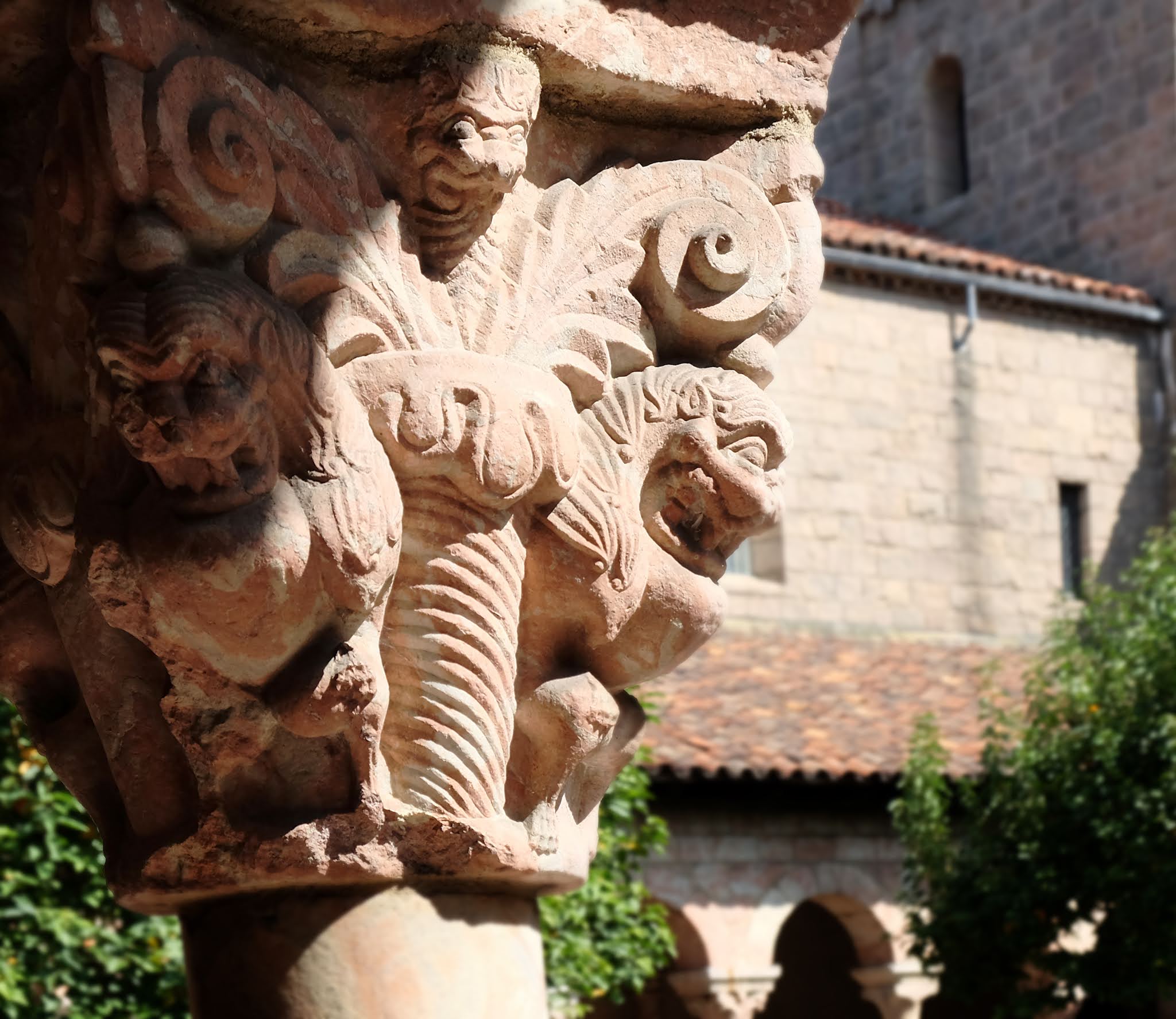
柱頭彫刻(Capitals)

材質は大理石だが、スペインでよく見かける粗削りの力強い彫りが特徴。絵柄は動物や人物が主体で、植物文様は少ない。 

「いったいこの絵柄は何を意味しているのか」などと深刻に考え込むより、しばらくじっと眺めているとつい笑いがこみあげてくるような、そんな気分にさせられるのがロマネスク彫刻の良さではないかと思う。


Photo(5)


Photo(6)


Photo(7)


Photo(8)

Photo(9)

Photo(10)


Photo(11)


Church of San Martin de Fuentidueña(サン・マルティン・デ・フエンティドゥエニャ教会)

フエンティドゥエニャは、セゴビア県の小さな村落(人口150人)であるが、12世紀半ばころにここに教会が建てられたものらしい。1950年代の半ばに「クロイスターズ美術館所蔵の6枚のロマネスク壁画絵と引き換え」との条件で、フエンティドゥエニャ教会を「永久貸与」することにスペイン政府」が同意したわけだが、いまから60年前のスペインではロマネスク美術への社会の関心も薄く、「何万とあるロマネスク教会のひとつぐらい」ということで、交換が実現したのだろう。

ただし石材は風化に弱い材質らしく、スペインに残された教会を囲む塀の部分は、今ではボロボロになり廃墟となっているようなので、文化財保存の観点からは、ニューヨークに移して正解だったということになる。

Photo(12)

Photo(13)

ロマネスク壁画(Spanish Romanesque wall paintings)

クロイスターズ美術館には、まだ3枚のスペインロマネスク壁画が残っていて、フエンティドゥエニャ教会の手前の廊下の壁に展示されている。

写真(14)のラクダ像は、サン・バウレリオ・デ・ベルランガ礼拝堂(San Baulelio de Berlanga)の内部を飾っていたロマネスク壁画の一枚。

ベルランガ礼拝堂は、ムスリム文化の影響を残すモサラベ様式と呼ばれる、数少ないプレ・ロマネスクの小さな聖堂であるが、内部の装飾は後代のロマネスク様式の壁画で飾られていた。19世紀後半から20世紀初頭にかけて、スペインの教会のほとんどが荒廃した時期に、ベルランガ礼拝堂の壁画も散逸し、いまは各地の美術館の所蔵品となっている。

 写真(15),(16)はブルゴス県のサン・ペドロ・デ・アルランサ修道院(San Pedro de Arlanza)の壁画。アルランサ修道院は、10世紀創建の由緒ある修道院だったが、今は廃墟になっている。

Photo(14)Camel (San Baulelio de Berlanga)

Photo(15)Lion(San Pedro de Arlanza)


Photo(16)Dragon(San Pedro de Arlanza)


(Summary in English )
The Met Cloisters Museum

I visited the Met Cloisters Museum in September, 2019. The Cloisters is an annex of the Metropolitan Museum of Art and we can visit both museums with a single admission ticket. It’s a relatively small museum specialized in the medieval European religious art, which is rare in North America.

With Rockefeller’s funding the museum was opened in 1938 at Fort Tyron Park overlooking the Hudson River in north Manhattan. It was one year before the beginning of World War II, and in Spain when fierce battles of civil war were being fought.

Saint-Michel-de-Cuxa Abbey                                                                           

The Cloisters Museum is known for the 12th century Romanesque cloister of Saint-Michel-de-Cuxa Abbey in southern France. The cloister was reconstructed using half of the capitals belonging to the Abbey which were acquired by an American sculptor and art collector George Barnard in early 20th century.

Romanesque church San Martín de Fuentidueña(Segovia, Spain)

Another Romanesque architecture I was very interested to see was San Martín de Fuentidueña church, the 12th century Romanesque church from Segovia(Spain). In the mid 1950s the Met made a deal with the Franco dictatorship to get the entire church as ‘’permanent lease’’ in exchange for six Spanish Romanesque fresco wall paintings which had been in their possession.

The church's 3,300 stones were removed one by one, and nearly 300 tons of stone were transported from Bilbao port to NY to be assembled at the Cloisters. It took almost seven years from planning to completion. I heard that the person in charge at the Spanish side had a stomach ulcer due to stress.

I doubt it would be possible to achieve such a deal now, but 60 years ago in Spain there was little social interest in Romanesque art, and Spanish people might have thought "it’s one of the tens of thousands of old churches" in Spain.

The irony is that the type of stones used for the church apparently was very vulnerable to wear in Spanish environment and the wall surrounding the church which was left in Spain has now become a ruin. Consequently for the conservation of cultural properties we can say that the deal might have been an adequate one.

The Romanesque Murals

The Cloisters Museum still has three Spanish Romanesque murals on display.

The camel of photo (14) is one of the Romanesque murals that adorned the interior of the Pre-Romanesque Chapel of San Baulelio de Berlanga(Soria, Spain). The Berlanga Chapel is one of the few remaining Mozarabic style architecture in Spain. It retains the influence of Muslim culture with the interior being decorated by Romanesque murals. During the period of devastation for most of the Spanish churches in late 19th and early 20th centuries, the murals of the Berlanga Chapel were dissipated and are now in the collection of museums around the world.

Photos (15) and (16) are mural paintings of the Romanesque Monastery of San Pedro de Arlanza(Burgos, Spain). The Arlanza Monastery was a historic monastery founded in the 10th century, but is now in ruins.


2019年1月30日水曜日

Walkman物語(1) ウォークマンZX100をわが家の古いオーディオシステムに接続した話 Connecting Walkman ZX100 with my old Linn system

(For summary in English please see the end of this text)

(WalkmanがLinnにつながった)

Photo(1) Walkman connected to Linn home audio system(Linnにつながったウォークマン)


私のWalkman
カナダの友人に「さいきんはSony Walkmanで手軽に音楽を楽しんでます」と言えば、「いまどきカセットテープを使っておられるとは、珍しいですね」という反応がよく返ってくる。それくらい、デジタル・ウォークマンのカナダでの知名度はけっして高くない。それでも数年前までは、トロントの家電販売店でときどき見かけたものだが、最近は店頭から姿を消してしまった。もっともiPodも見かけなくなったので、携帯音楽プレヤーが売れなくなった、ということなんだろうか。

私が初めて買ったデジタル・ウォークマンはS754(8GB)で、今から8年ぐらい前のことだった。値段はカナダドルで100ドルくらい(一万円前後)だったと思う。
シャツのポケットに入るほど小さく、付属イヤーフォンでもオヤと思うほどの音が出るのに感心した。今でもちゃんと現役の働き者である。

Photo(2) My Walkmans 私のウォークマン

その後A856(32GB) A865(16GB)X1050(16GB)A17(64GB)A25(16GB)Aシリーズを主体に買ってきた。A865X1050は音に暖か味があり気に入ったが、タッチスクリーンが使いににくくて閉口し、おまけにX1050はずっしりと重いうえに、電池が2時間ぐらいしか持たないので、手放してしまった。


Photo(3) ZX100(128GB)

Walkman最高機種とのふれ込みでZX1が発売されたとき、当時トロントにあったSony Shopで試聴してみたが、値段もさることながら、タッチスクリーンになじめなくて、けっきょくボタン方式のA17にした。
そのときの記憶から、ZXシリーズは全てタッチスクリーンだと思い込んでいたのと、値段が高いこともあり、ZXは私の視界に入っていなかったが、さいきんZX100がボタン方式であることに気づき、また在庫も少なくなっているらしいので、急いで一台買ってみた。値段はAシリーズの倍以上するが、製品の仕上がりとぐあいといい音の厚みといい、買ってよかった一台である。なおZX100については、次回の記事であらためて取り上げる予定。

ウォークマンが、わが家のオーディオシステムにつながった
Photo(4)A17 connected to Linn Classik(Linn ClassikにつなげたA17)

1950-70年代に録音されたクラッシク音楽を中心に、CDをぼつぼつ買い込んでいるうちに、気がついたら1000枚近いものになっていた。段ボール箱に入れ、部屋のあちこちに積み重ねて保管してきたが、聴きたいCDを探し出すのにも苦労するし、とにかく場所ふさぎで困るため、数年前から少しずつRipしてはFlacファイルでパソコンに取り込み始めた。
ripしたあとのCDは、友人にさしあげたり、どこかにdonationしたりして、いまでは再生はもっぱらパソコン経由が主になっている。デジタル・オーディオへの第一歩、というところである。
一部の曲はWalkmanにも入れ、イヤーフォンで楽しんできたが、やはりわが家のオーディオ装置につなげてスピーカーを通じて聴きたい。という思いがつのってきた。
まず最初に考えたのは、ラップトップにDACをかませ、RCAケーブルでプリアンプに接続する、というものだったが、わが家のオーディオ設備は、リビングのテレビキャビネットにTVと同居しているため、リビングの雰囲気が台無しになるということで、この案は論外とされた。

ではWalkmanと小さなDACの組み合わせなら、キャビネット内に収納可能ではないかと思ったが、Walkman USBDACにつないではみたが、わが家の古いオーディオ装置(Linn)とはうまくつながらない、なんていう問題が発生しないだろうか、などなど疑問がつぎつぎ湧いてきて、あいにく手元にDACがないためテストもできず、また役に立たぬやも知れぬDACにお金を費やすわけにも、ということでこの案も足踏み状態となり、わが家の「Walkanを活用するデジタル・オーディオ」構想は、一時棚上げ状態が続いていた。

(Walkman line out cableが見つかった

Photo(5)Walkman line out cableウォークマン・ラインアウト・ケーブル

昨年の秋「WalkmanHome audioにつなぐ方法」という見出しで、いろいろネット検索していたとき、eBay ''Walkman line out cable '' なるものが売りに出ているのを発見した。商品は「WalkmanからLine outを取り出すケーブル」値段は送料こみで10ドル、売り手は香港にいるらしい。もし作動しなくても10ドルならあきらめがつく、とさっそく注文してみた。1ヶ月くらいで届いたケーブルを使い、WalkmanをおそるおそるプリアンプのAUX端子につないでみると、みごとに音が出た。

わが家のオーディオ装置は、10何年前に買った、Linn社入門レベルの Classik-Musicモデル(CDプレヤーがついたレシーバー)という古いもので、アナログ接続がメインになっている。従ってBluetoothなど無線接続はおろか、USB接続もまったく受け付けない、いまやアンティークに近いしろものである。

機器の構成は、Linn Classikをプリアンプ接続で パワーアンプLinn LK140(140W)につなげ、Linn Katan(8Ω)卓上スピーカーを鳴らす、というもの。
·                             
この組み   この組合わせでは、大編成オーケストラの演奏を勢いよく響かせるには力不足だが、澄んだきれいな音がでるので、ピアノ曲や小編成の合奏曲には向いている。
アパート住まいの身で、スピーカーの置き場は、リビングのテレビキャビネット上にしかスペースがとれないため、キャビネットの共鳴を避けるため、コルク板とパソコン用のマウスパッドを数枚重ねてサンドイッチにして、スピーカーの下に敷いてある。


Photo(6)Walkman dock cable(AUG line) オーグライン・ドックケーブル

長年の夢がかない「Walkmanを古いLinnシステムにつなぐことが出来た、やれやれ」、と喜んだのも束の間、では日本ではいったいどうなっているんだろう、とYahoo検索を始めたら、日本アマゾンで''Walkman dock cable''を見つけたことで、ケーブル探しの泥沼をかいま見ることになった。

売り手はmoon & tide社、日本製で値段は中国製の10倍くらいする。ケーブル長は50cmで、中国製の2mに比べると 1/4とずいぶん短い。
ただし商品説明を読むと、ケーブル材はオーグ合金という金・銀を含む合金で、「銀の持つ優れた電気特性と金の持つ耐酸性、伸び性を併せ持っています」ということらしい。
アマゾンの買い手コメントの中にも「確かに音がよくなった」というのがある。

もうこうなれば乗りかかった船」と、すぐさま日本アマゾンに発注し、東京の友人に転送を依頼した。手元に届いたのは年末だったが、この一ヶ月ぐらいの試聴でも、中国製に比べると音に柔らか味と深みが出てきたような感じ。そしてZX100をつなぐと、さらに元気いっぱいの音が出る。

ただ50cmはちょっと短かすぎる。AUX端子は、どのプリアンプでも背後にあるのがふつうだと思うが、ケーブルが短いとWalkmanを操作するのに苦労する。せめて、あと20cmくらいあった方が便利。そのぶん値段は高くなるんだろうが、長い目で見れば操作しやすさの利点の方がまさると思う。

もうひとつの要注意点は、2016年以降のWalkmanはアンプが変わっており、Line outがなくなっているらしいこと。従って、このケーブルはZX100までしか使えない、ということのようである。Sonyのサイトを見ても、この点について正式なコメントは見当たらないが、日本のユーザーの間では常識になっているらしい。

ともかくWalkmanLinnのドッキングが実現し、なかなかいい調子で始まった2019年の新春である。


参考)
ムーンアンドタイド(HP)
オーグラインとは
https://aug-line.com/aboutus


                                   。。。。。。。。。。。。。。。。。。。。。。。

(Sumary in English)


Walkman Story(1) 

Connecting Walkman with my Linn home audio system via RCA line out cable


Photo(1)Walkman connected with my Linn home audio system using RCA line out cable


How to connect Walkman with home audio
If you do on line search about this subject, you might find a Sony's blueetooth speaker(SRS-HG1), but not much useful information on what we really want to know, i.e. ''How to connect Walkman with an old home audio system using line out RCA cable''
Looking for a good solution I spent a few months; visiting Sony’s web sites in English and in Japanese, Forums of Walkman users etc.

2 months ago I came across an offer on eBay stating ‘’Walkman line out cable’’. It was offered from HK at a price of $10 approx with freight included. 
I was not sure if it would be a good fit to my needs, but ordered it immediately, because $10 would not break the bank, if it did not work.


Photo(5)Walkman line out cable(Made in China)

My home audio system is composed of; Linn Classik-Music(receiver with a built-in CD player), Linn LK140 (140w) amp and Katan book shelf speakers. It is over 12 years old system and Linn Classik does not have any USB nor wireless connection. That's why a line out RCA cable is needed to connect my Walkman 
via AUX terminal with Linn Classik.

After one month the cable arrived. The cable worked! The sound quality seemed to be acceptable.


Photo(6)Walkman doc cable(aug-line) made in Japan


The following day I was curious about what the Japanese Walkman users had been doing to solve the Walkman connection problem with old audio system and did some quick search on line. 


An offer was found on Amazon Japan for a product ‘’Walkman doc cable’’. 

The seller was a Japanese company called ‘’moon & tide’’ and the product was a 50 cm Walkman line out cable made of a composite metal of gold and silver(named aug-line). 


The price was 10 times over made in China one, but ‘’a cable made of gold and silver’’ wow!


Since some of the users comments were favorable as well, immediately placed an order and asked one of my friends in Tokyo to transfer the parcel to me, because Amazon Japan declared not to deliver it overseas.


The cable arrived after the X’mas.
50cm cable is a little too short to operate the Walkman comfortably, but the sound comes out from Lynn system is very good. Not necessarily 10 times better, but really nice.

A note of caution
Apparently Sony redesigned the Walkman’s amplifier in 2016 and the line out was eliminated from the products such as WM1, ZX300 etc.

It means these line out cables will only be compatible with up to ZX100 which was put to the market in Oct, 2015. 
I’ve not found any official comment of Sony about this subject, but it is apparently a well known fact among Walkman users in Japan.

I’m the fan of button based operating Walkman and ZX100 is the best Walkman I’ve had. Will talk about ZX100 and the headphone amp in the next article.

(P.S.) On eBay a Japanese seller is currently offering  ‘ Dock-RCA Cable for Walkman Aug-line WM-Port Line Out From Japan ’’. It seems to be the same cable I bought through Amazon Japan direct from the manufacturer.